AI-Powered Document Intelligence SaaS
DocuMind
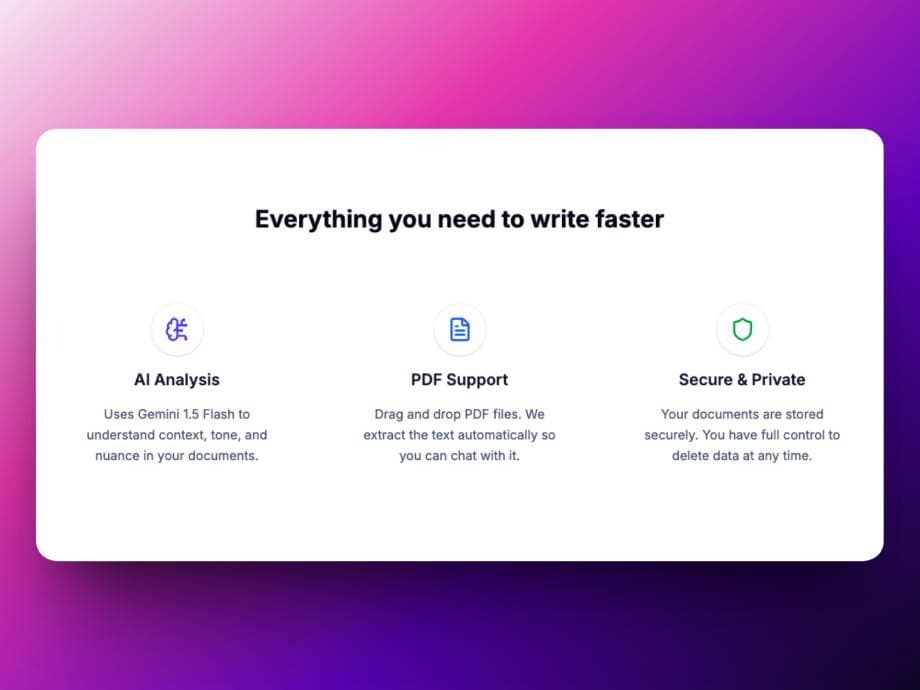
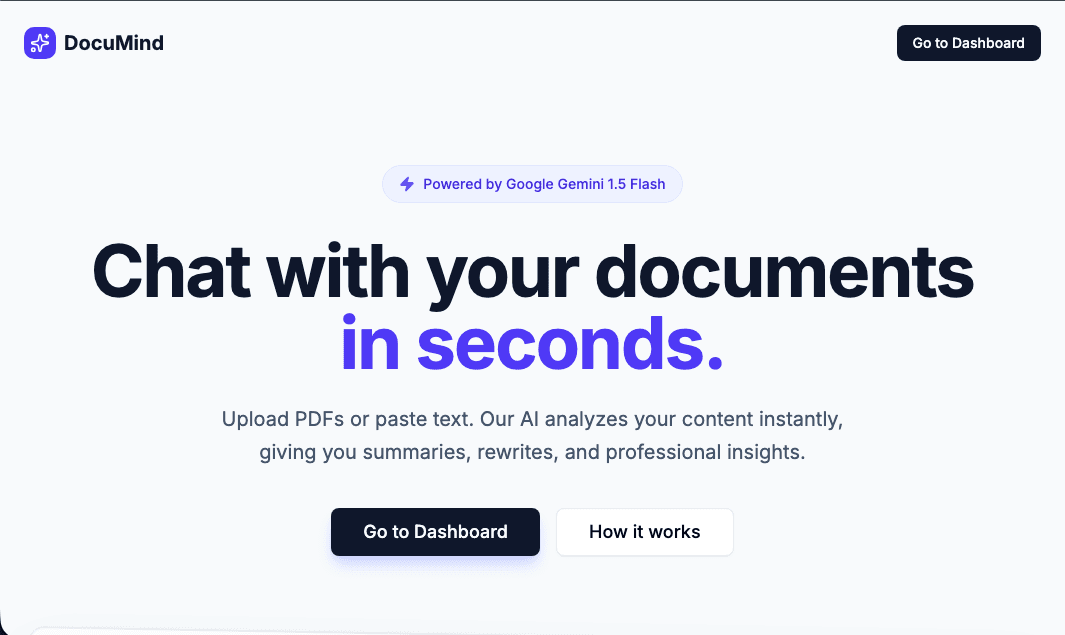
DocuMind leverages the massive context window of Gemini 1.5 Flash to allow users to 'chat' with their PDF documents. Unlike traditional RAG pipelines, this application uses a context-stuffing approach for faster, more coherent document analysis. It includes a complete SaaS infrastructure with secure authentication, database persistence, and a credit-based usage system to prevent API abuse.
The Problem
Reading through dense technical documentation, legal contracts, or academic papers is time-consuming. Most users don't need to read every word; they need to understand the core concepts and extract key insights quickly. Traditional tools are often static, offering no way to interact with or query the text.
The Solution
DocuMind bridges the gap between static files and active intelligence. By combining high-performance text extraction with the massive context window of Gemini 1.5 Flash, the application can 'read' an entire document instantly. Users can then ask for summaries, tonal rewrites, or specific data extraction.
- Instant PDF-to-Text conversion for immediate analysis.
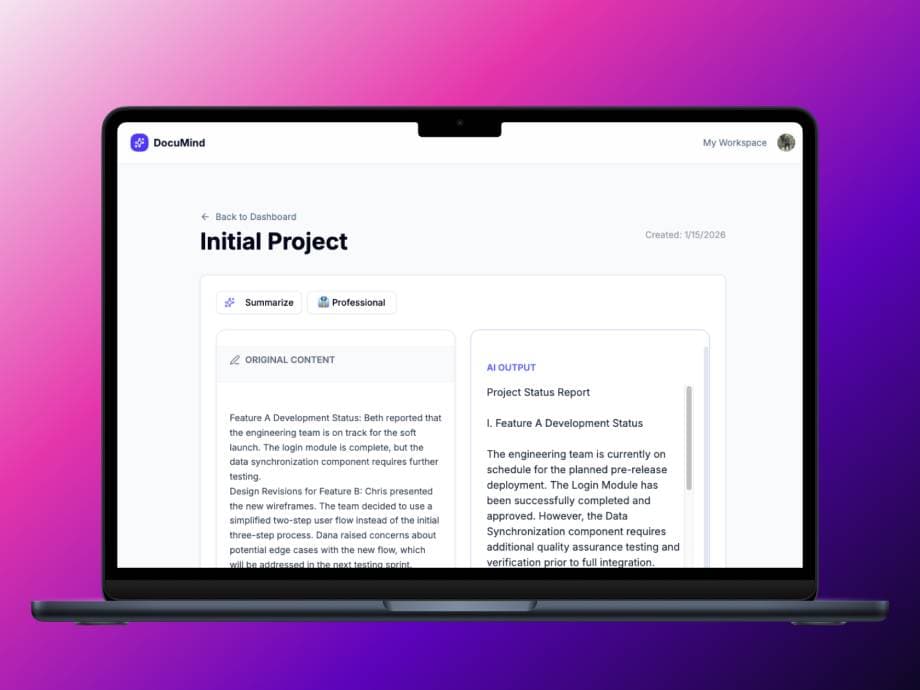
- Dual-pane editor allowing side-by-side comparison of original vs. AI output.
- Credit-based system that resets daily, protecting the API from overuse.
Technical Challenges
One of the biggest hurdles was handling the PDF parsing within the Next.js Server Actions environment. The library relied on Node.js specific APIs that conflicted with the edge-ready bundling of Next.js.
I solved this by configuring `serverExternalPackages` in the Next.js config to prevent bundling of the parser and implemented a polyfill for the `DOMMatrix` API to satisfy the library's legacy dependencies without pulling in heavy canvas engines.
Key Features
Real-Time AI Streaming
- Implemented Vercel AI SDK to stream responses character-by-character, eliminating wait times for long summaries.
- Customized prompt engineering to handle both summarization and professional rewriting tasks.
PDF Intelligence Engine
- Built a server-side parsing pipeline to extract raw text from uploaded PDF binaries.
- Optimized Next.js config to handle large file buffers and external node modules.
SaaS Infrastructure
- Integrated Upstash Redis to track daily API usage per user (Rate Limiting).
- Developed a 'dirty state' editor that auto-saves manual edits to the database.
- Secure multi-tenant architecture ensuring users only access their own documents.
Technology Stack
Frontend & Framework
Backend & Database
AI & Intelligence
Infrastructure
Gallery